Downpass is an independent international standard that certifies that the down and feathers used in a duvet, pillow or garment have been sourced in strict compliance with animal welfare standards: no live-plucking, no force-feeding and no caging. Each certified product can be traced back to the farm of origin via a unique verification number.
SOMMAIRE
1. What Downpass label is ?
Downpass is an international, manufacturer-independent certification standard that arose from a collective awareness of the conditions under which down and feathers are sourced worldwide. It is based on the European Convention for the Protection of Animals kept for Farming Purposes, supplemented by strict quality specifications.
Its aim is clear: to ensure that the growing global demand for natural down can be met through ethically sound supply chains worldwide, including in emerging economies where production is expanding rapidly.
The Downpass applies to all products filled with down and feathers from waterfowl (ducks and geese): duvets, pillows, clothing and outdoor equipment.
It combines two inseparable aspects: ethics (animal welfare, a ban on live plucking and force-feeding) and quality (traceability and compliance with label information).
2. Practices prohibited under the Downpass certification scheme
Live plucking: a practice that is still widespread
Live plucking involves plucking the feathers and down from live birds, sometimes on several occasions before they are slaughtered. Although banned in France and the European Union, this practice remains common in several countries that export down.
Downpass strictly prohibits live plucking. Only down collected during the animals’ natural moult, after slaughter, or under strictly controlled conditions is accepted.
Force-feeding and the production of foie gras
Geese and ducks reared for the production of foie gras undergo intensive force-feeding. Down from these animals is explicitly excluded from the scope of Downpass certification.
Buying a Downpass-certified duvet ensures that its filling does not come from the foie gras industry.
Cage rearing
The animals from which Downpass-certified down is sourced must have been reared in humane conditions: with access to space, water and light. Restrictive cages are prohibited.
3. How does the Downpass audit work?
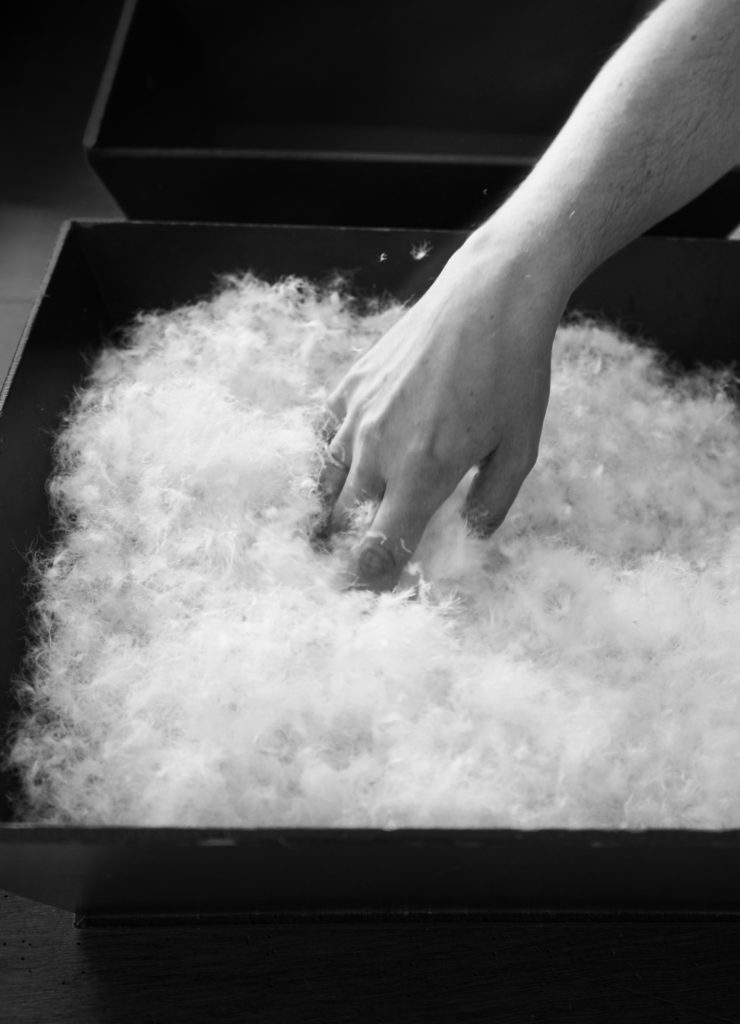
Scheduled and unannounced inspections
Independent, accredited certification bodies send auditors to farms several times a year, with or without prior notice. This combination makes fraud much more difficult.
These inspections cover the entire supply chain: from farms to manufacturers, via traders. Whether the down comes from France, Hungary, Poland or China, the same requirements apply.
A certification valid for two years, renewable
Downpass certification is granted for a maximum period of two years. At the end of this period, the manufacturer must undergo the full set of inspections again. There is no such thing as permanent certification.
Quality checks in addition to ethical audits
Downpass also verifies that the composition of the filling matches the information on the label (percentage of down, animal species, quality of the material). These checks are carried out through anonymous in-store purchases (mystery shopping) and analyses by an independent laboratory.
4. How can I check whether a product is Downpass-certified?
The verification number on the label
On the label of a Downpass-certified product, you will find a unique verification number consisting of a letter followed by 7 or 8 digits. This number is assigned to a specific manufacturer and corresponds to a specific audit.
THE VERIFICATION ON downpass.com
Go to downpass.com and enter this number into the verification tool. This will allow you to confirm that the certification is valid, that it has not expired, and to identify the certified manufacturer.
Top tip: if a label says ‘Downpass’ but does not include a verification number, this is a red flag. A genuine Downpass certification always includes this unique number.
5. Downpass vs RDS: what are the differences?
The Responsible Down Standard (RDS), managed by Textile Exchange, is the other major international certification for ethically sourced down. What are the differences between the two certifications?
| Downpass | RDS | |
| Organisation | EDFA | Textile Exchange |
| Scope | LMainly bedding | Bedding + clothing + outdoor gear |
| Traceability | Back to the farm, individual number | Back to the farm, traceability chain |
| Live plucking | Prohibited | InterdiProhibited |
| Force-feeding | Prohibited | Prohibited |
| Quality controls | Included (mystery shopping + laboratory testing) | Non Not systematic |
| Certification period | Maximum 2 years | Annual |
| Recycled down | Not covered | Not covered |
In practice, both certifications meet the same fundamental ethical requirements. Downpass has historically been more firmly established in the European bedding industry, whilst RDS is more prevalent in the technical and outdoor clothing sectors.
6. The Downpass label in the hospitality sector
Downpass certification has become a key purchasing criterion for high-end hotels, particularly in Europe, where travellers’ awareness of animal welfare and responsible purchasing has increased significantly in recent years.
Offering Downpass-certified bedding means:
- Meeting the expectations of socially conscious travellers, an increasingly large number of whom check establishments’ CSR commitments
- Highlighting the quality of your rooms through a recognised and verifiable certification
- Contributing to your sustainable development objectives, a key selling point in tenders for major clients
- Standing out in a hotel market where bedding is becoming a selling point in its own right
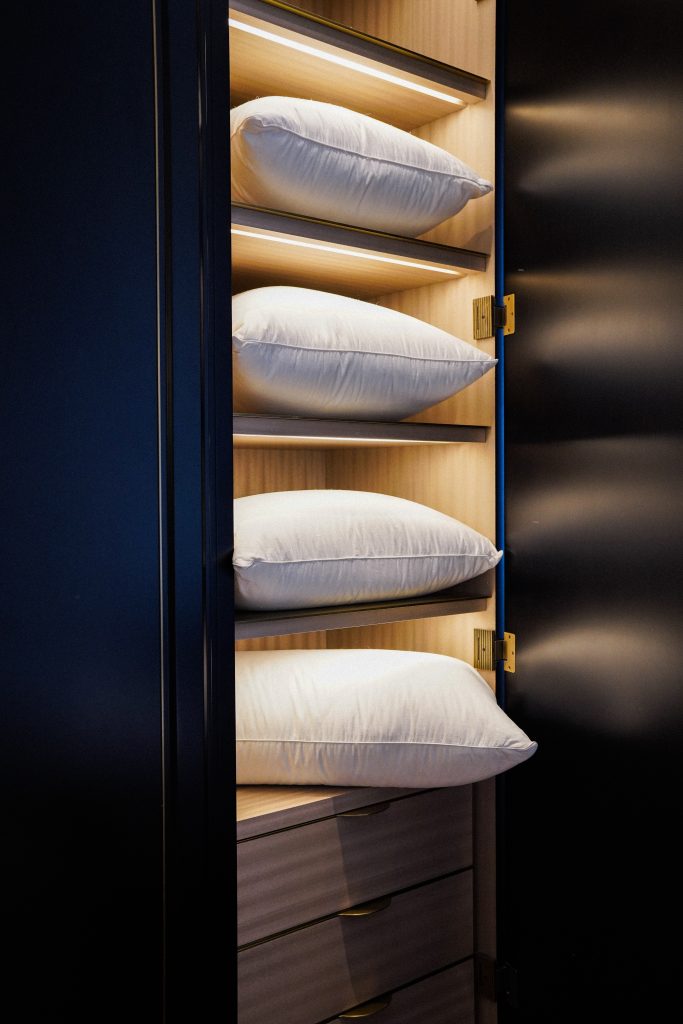
7. Drouault’s Downpass initiative
At Drouault, Downpass certification reflects a conviction that has always been at the heart of the way we work: you cannot make a high-quality duvet using down whose origin is unknown.
Our master down craftsmen have always known that quality begins with the rearing process. The down from a goose reared in good conditions does not have the same insulating and thermoregulatory properties as material sourced from intensive farming.
The Downpass certification now allows us to prove this: every Drouault duvet made from Downpass-certified natural down is traceable back to the farm of origin.
8. FAQ — Your questions about the Downpass label
Does the Downpass label apply to duvets and pillows?
Yes. The Downpass certifies the filling, regardless of the product in which it is used: duvets, pillows, bolsters, clothing or sleeping bags. It is the raw material that is certified, not the finished product itself.
What is the difference between Downpass and the RDS (Responsible Down Standard)?
Both certifications share the same fundamental ethical requirements. Downpass includes quality controls on the composition of the filling (mystery shopping and laboratory analyses) which are not carried out as a matter of course under the RDS. The RDS is more widespread in the clothing and outdoor sectors, whilst Downpass is more common in the European bedding sector.
How can I tell if my product is genuinely Downpass-certified?
Look for a number on the label consisting of one letter and 7 or 8 digits. Then go to downpass.com to enter this number and check that the certification is valid. Without this number, the word ‘Downpass’ on a label is no guarantee of anything.
Does the Downpass label also guarantee the quality of the down?
Yes. In addition to ethical criteria, the certification process verifies that the filling material matches the information on the label (percentage of down, species, quality). Mystery shopping and independent laboratory analyses are carried out regularly.
Is Downpass certification compulsory?
No, it is voluntary. There are no European or French regulations requiring Downpass certification in order to sell down bedding. It is a voluntary commitment on the part of manufacturers, which makes obtaining it all the more significant.
Does Downpass also cover recycled down?
No. The Downpass certification scheme only certifies virgin down and feathers sourced from animals reared in accordance with its criteria. Recycled or regenerated down does not fall within the scope of its certification.