More than just a filling, goose down has been regarded for generations as the finest material in the world of bedding.
To understand why goose down is so highly sought after, one must look at its composition, its benefits and how it is produced. Discover what makes goose down the material of choice for high-end duvets and pillows.
SUMMARY
1. What exactly is goose down?
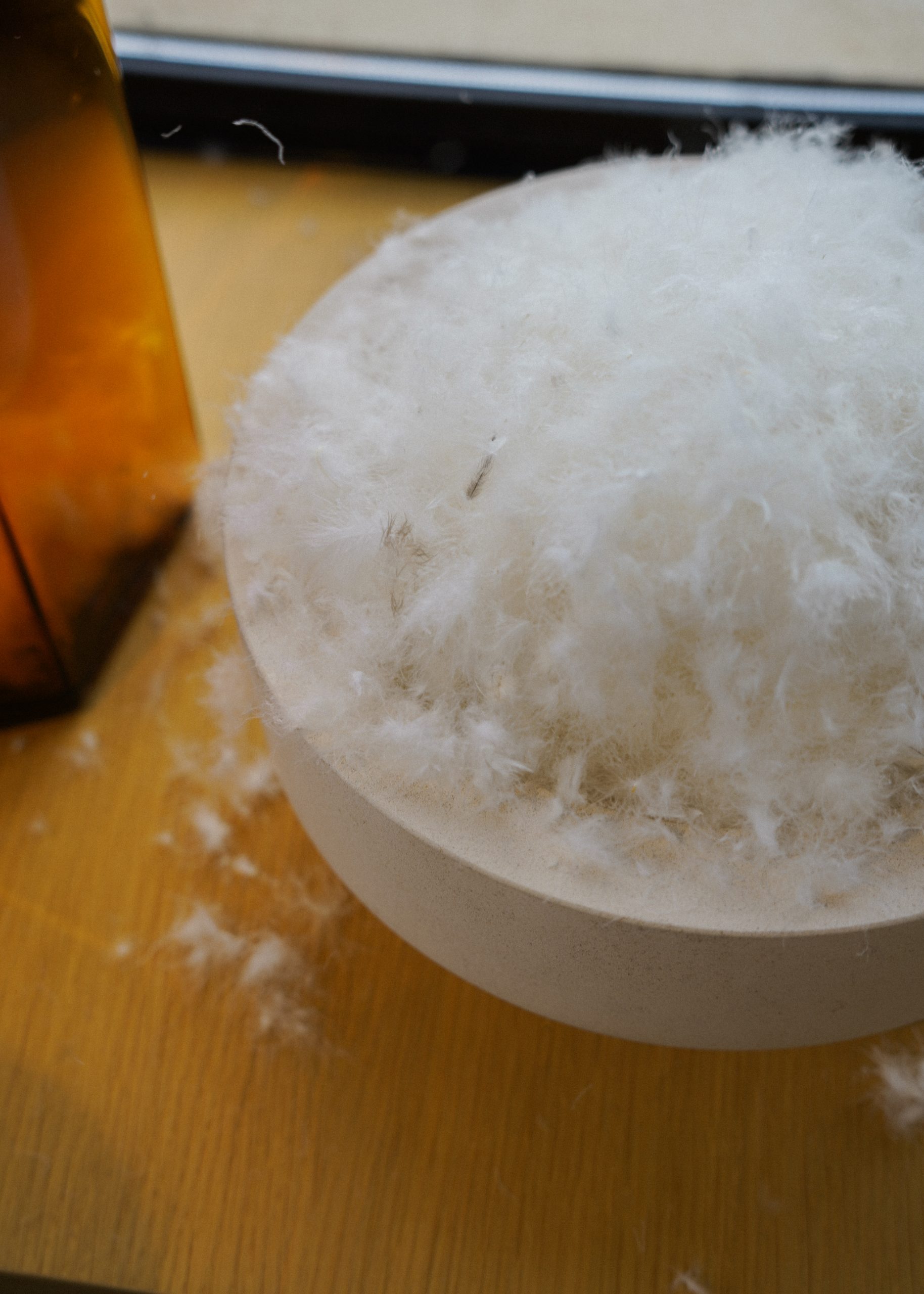
Down is a bird’s finest plumage. Located directly against the skin, on the belly and breast, it consists of tiny filaments that radiate from a central point without a rachis – the rigid shaft found in ordinary feathers. This structure enables it to trap pockets of air that act as a natural thermal insulator.
Down is distinct from feather down: these are small, light feathers that have a central shaft. Both coexist in most natural bedding products, but pure down remains the finest and most effective material.
In geese, down clusters are naturally larger than in ducks, with more branching. For the same quantity, they therefore trap more air, which directly translates into better loft, better insulation and greater lightness.
2. Advantages and limitations of goose down
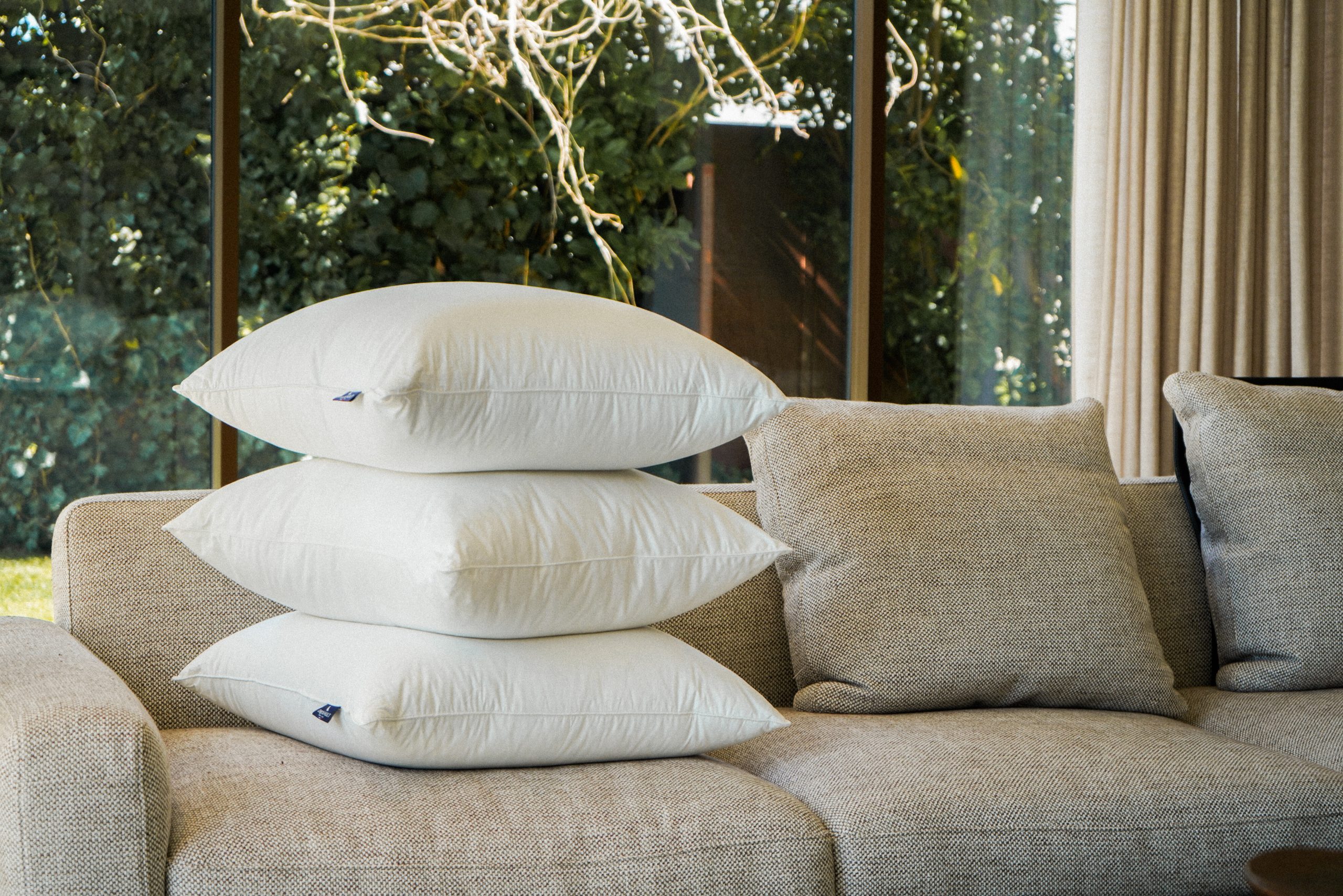
Using goose down in duvets and pillows offers many advantages over synthetic fillings. It is a material that provides better insulation, is lighter, more breathable and more durable. Goose down also offers a softness and comfort that is hard to match.
It is a high-quality material and therefore more expensive to produce; it requires more careful care and can sometimes raise ethical concerns during production.
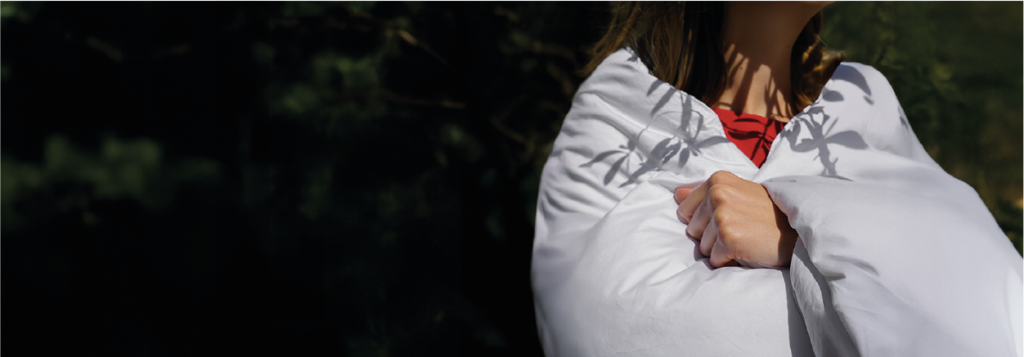
Exceptional insulation in a lightweight form
Thanks to its three-dimensional flake-like structure, goose down naturally traps large amounts of air, which acts as the actual thermal insulator. As a result, for the same weight, a goose-down duvet provides far better insulation than a synthetic duvet.
To illustrate this difference in practical terms: a goose-down duvet weighing 180 g/m² provides suitable insulation for cool or temperate bedrooms, where the temperature is below 18 °C. A synthetic duvet of the same weight, on the other hand, is only recommended for rooms heated to over 20 °C. It is the exceptional loft of goose down that creates this difference.
A lightness that provides a soft, cosy feel
The sensation of sleeping under a goose-down duvet is often described as feeling as though you are ‘floating’. The down clusters, which have no quills and are extremely airy, weigh almost nothing.
Whether in a duvet or a pillow, goose down provides an instantly soft feel. Its natural ability to compress and then regain its volume guarantees consistent comfort, night after night.
Natural breathability
Goose down does not merely insulate against the cold. It also regulates the moisture produced by the body during the night. Its fibres allow water vapour to circulate whilst retaining heat, offering comfort that is both cosy and breathable, without feeling stifling.
Remarkable durability
Thanks to the natural elasticity of its clusters, goose down retains its loft and thermal performance for many years when cared for properly. It is one of the few fillings which, if properly cared for, can last for decades. This exceptional durability makes it a long-term investment, often more economical in the long run than a succession of synthetic duvets that need to be replaced regularly.
A high price
Price is often the biggest barrier to purchase, as goose down is a rare material that is difficult to collect and process. Products filled with it, particularly those with a high down content (80 per cent or 90 per cent), are significantly more expensive than their synthetic or duck-down equivalents. However, this higher initial cost can pay for itself given the material’s longevity.
More delicate care
Goose down requires special care when washing: a moderate temperature (generally 40 °C maximum); tumble drying is recommended to restore loft, or else prolonged airing whilst laid flat. If washed incorrectly, the down clusters may clump together, permanently reducing the insulation properties. Some high-end duvets should be taken to a specialist dry cleaner.
Allergy risks: a real or imagined problem?
This is one of the most frequently asked questions about goose down. However, an allergy to down itself is rare. The vast majority of reactions attributed to down bedding are in fact caused by dust mites and their droppings, which lodge in mattresses, pillows and duvets, rather than by the down clusters themselves.
However, poor-quality or recycled down can pose a risk of allergies, as damaged down clusters produce dust that can encourage the proliferation of dust mites and trigger reactions. The quality of the filling and the density of the outer fabric are therefore the two key factors for people with sensitivities. The Nomite label certifies that the weave is dense enough to act as a barrier against dust mites.
3. The transformation: from raw feathers to a fine material
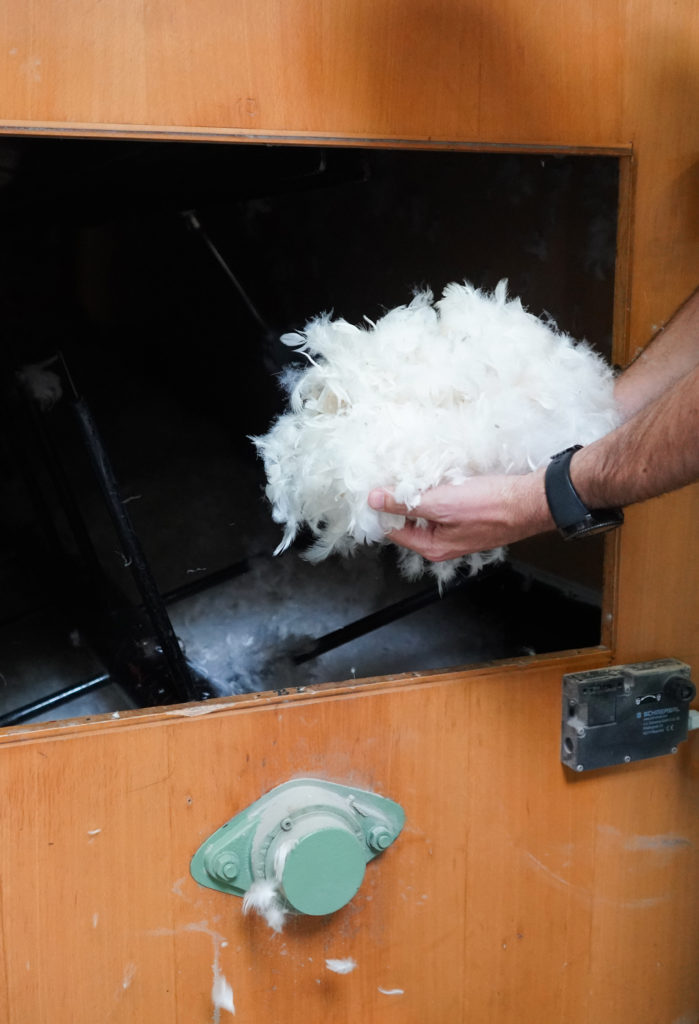
Harvesting the feathers is only the first step. Between the raw feathers coming from the abattoir and the down ready to be used to fill a duvet, there is a long processing journey that directly determines the quality of the final product.
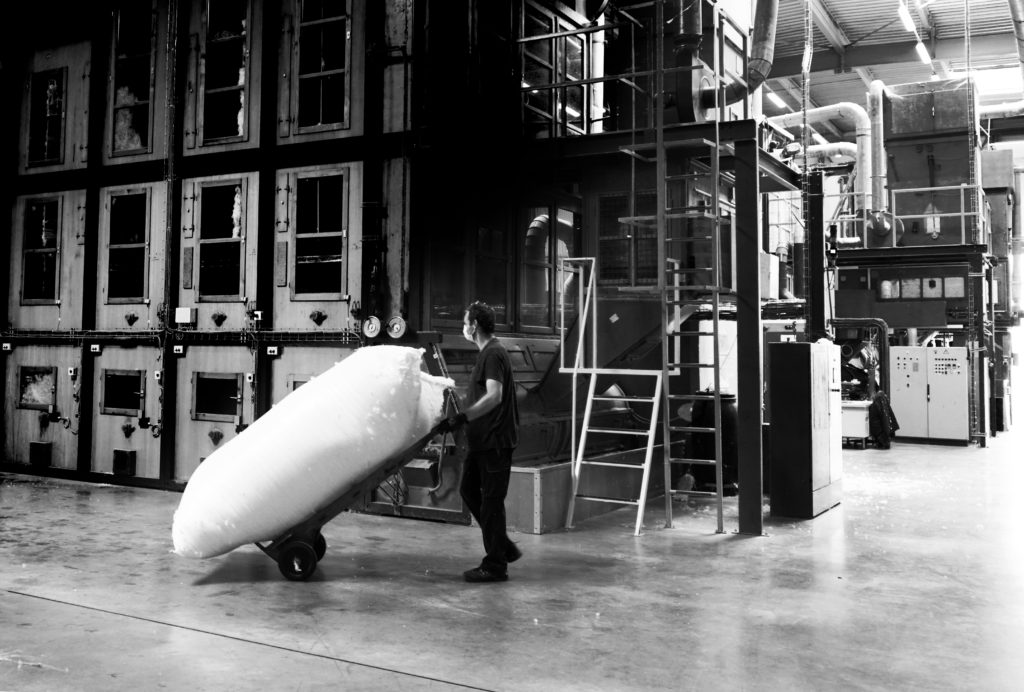
Stage 1: Pre-washing and sterilisation
The raw down is subjected to pre-washing and high-temperature sterilisation to eliminate any bacterial contamination. This stage is regulated by European health standards (Regulation (EC) No 1069/2009).
Stage 2: Washing and drying
This is followed by a thorough wash, followed by controlled drying. Improper drying can damage the down clusters, break their filaments and permanently reduce their loft. It is the control of temperatures and cycle times that distinguishes expert processors from standard operators.
Stage 3: Mechanical sorting
This is the central stage of the processing. The dried down passes through mechanical air-flow sorters which separate the different categories of material according to their lightness and aerodynamics:
- Large feathers, the heaviest and stiffest
- Featherlets, small feathers with a central shaft
- Semi-down, between featherlets and pure down
- Pure down, the lightest, carried highest by the air flow
This sorting process yields batches with precisely defined properties, which are used to formulate specific fillings.
Step 4: Blending the batches
Down is a living material, the characteristics of which vary according to the seasons, regions of origin and breeds of geese. The finest down manufacturers therefore blend different batches to achieve a mixture with stable and reproducible properties: target fill power, lightness and durability. This is the most technical and specialised aspect of the trade, passed down in the form of recipes that have been archived and refined over decades.
4. How can you tell if a goose-down duvet is of good quality?
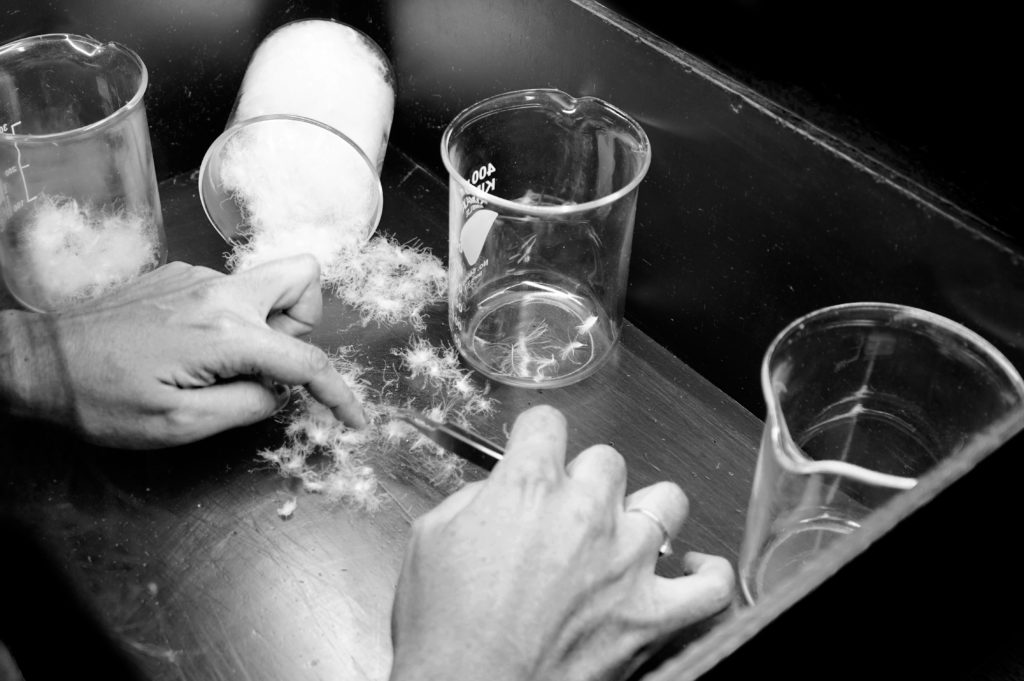
The down-to-feather ratio
The composition of a natural filling is expressed by the down-to-feather ratio. A product containing 90 per cent down will be significantly more voluminous, lighter and more durable than one containing 50 per cent, even if both are marketed as ‘natural goose filling’. This is a key factor to check on the label before making any purchase.
End-to-end control of the supply chain
Few bedding manufacturers have control over the entire process, from collection at the abattoir through to the finished product. Those that do can guarantee consistent quality from one batch to the next, verify the actual characteristics of the down via an in-house laboratory, and ensure full traceability of the raw material.
Key points to bear in mind when choosing a goose-down duvet
The quality of goose down is built up at every stage of a long and demanding process: animal-friendly rearing, ethical and traceable harvesting, carefully controlled processing that preserves the integrity of the down clusters, rigorous sorting and expert blending.
The factors that really make the difference when buying:
- The manufacturer’s ability to demonstrate the traceability of its raw materials, and its expertise as a Master Down Specialist.
- The down-to-feather ratio (the higher the percentage of down, the better the product)
- The presence of an ethical label (RDS or Downpass, depending on requirements)
- Nomite certification for people sensitive to dust mites
- Oeko-Tex Standard 100 certification for the product’s safety
The quality of a down product depends on the expertise of those who select, assemble and craft it. At Manufacture Drouault, this task is entrusted to our Master Down Specialist. As the custodian of a rare craft, he selects the finest batches of down and ensures that the subtle balance between loft, lightness, insulation and durability is maintained.
It is this expertise, combined with the excellence of the goose down, that gives rise to exceptional products, such as our Galaxie goose-down duvet, designed to offer unrivalled comfort.